Oral Surgery
Should You Keep Your Wisdom Teeth? What the Evidence Says
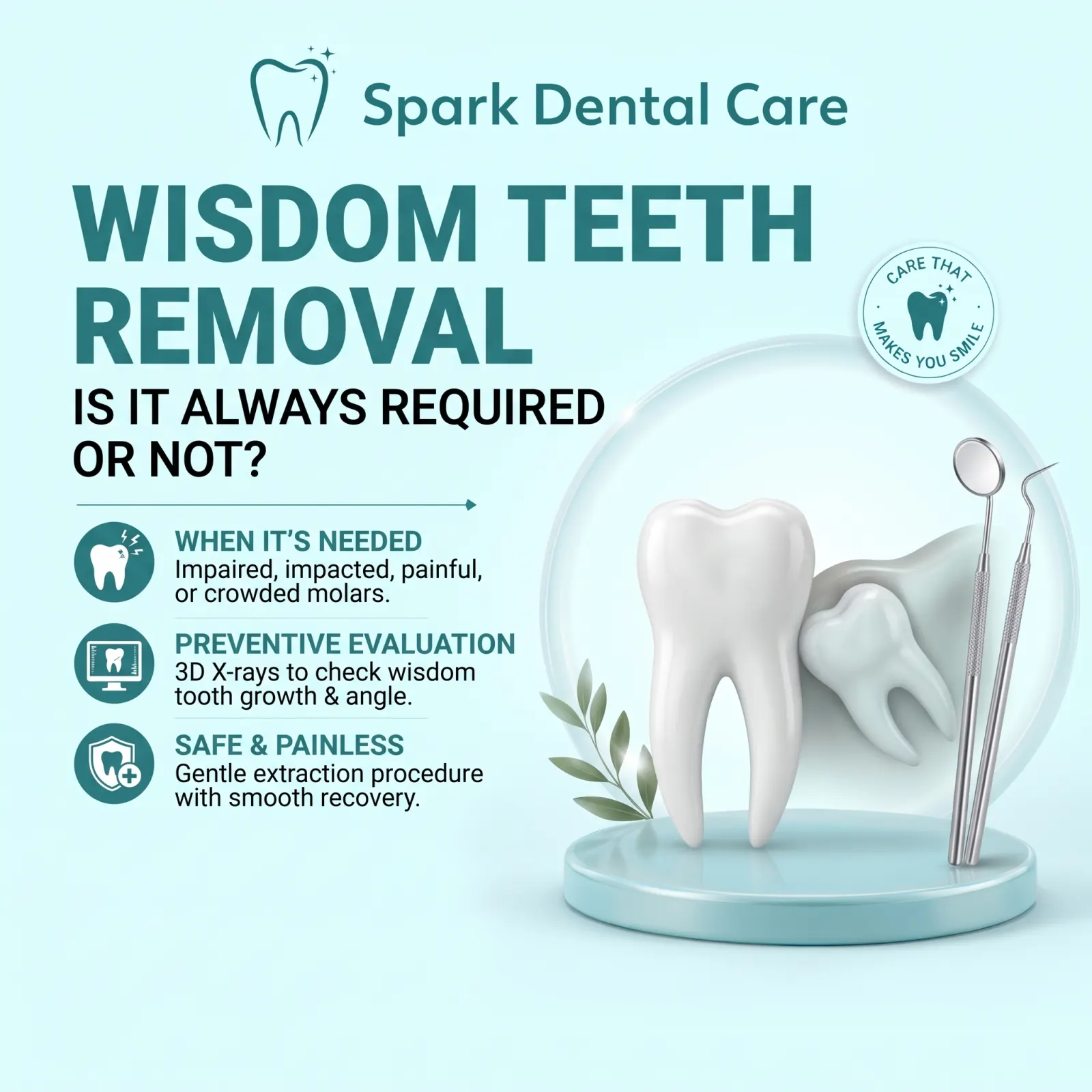
Wisdom tooth advice has changed more in the last fifteen years than most people realise. Removing every impacted wisdom tooth as a matter of routine used to be standard practice. The evidence has since moved in the other direction, and most guidelines now favour keeping wisdom teeth that are healthy, fully erupted and easy to clean. This guide explains what the current evidence actually says, when keeping your wisdom teeth is the right call, when removal is the better option, and what an X-ray can tell you before you decide.
What the evidence actually says about keeping wisdom teeth
The honest answer is that the major guidelines do not fully agree with each other, and pretending otherwise would not help you make a decision. What they do agree on is the direction of travel: the automatic, routine removal of wisdom teeth that are not causing problems has fallen out of favour, and active monitoring is now the recommended approach for healthy teeth. Here is where each of the main sources stands.
- NICE (UK) recommends that pathology-free impacted wisdom teeth should not be removed routinely, and that a first episode of infection around the gum flap is not in itself a reason to operate - a second episode is
- Cochrane review found the evidence insufficient to either support or rule out removing wisdom teeth that cause no symptoms, and concluded that watchful monitoring can be a prudent strategy
- AAOMS (US, 2014) recommends active surveillance of un-erupted, disease-free wisdom teeth with an annual X-ray and clinical review, rather than removal as a precaution
- Royal College of Surgeons argues the opposite in some cases, warning that waiting too long can damage the neighbouring molar and that surgery is safer in younger patients
- What every guideline agrees on is that the decision needs a proper examination and an X-ray, plus a plan for review - not a decision made from a list of symptoms
When keeping your wisdom teeth is the right call
If your wisdom teeth are healthy, there is no reason to take them out. This is not a wait-and-see compromise - for most people with healthy, fully erupted wisdom teeth, keeping them with regular review is the recommended long-term plan. The point is not to ignore them, but to manage them actively rather than remove teeth that are doing no harm.
Book a routine dental check-up how braces and aligners affect back tooth crowding
- They are fully erupted and sit in a normal, usable position in the bite
- You can genuinely clean them - they are reachable with a brush and floss without special effort
- There is no decay in the tooth and no bleeding or deep gum pockets around it
- They are not pushing the second molar forward or causing the back teeth to crowd
- Your X-ray shows normal tissue around the root, with no cyst or bone change
- No orthodontic, implant or denture plan needs the space to be cleared
When wisdom teeth should be removed
Keeping wisdom teeth only makes sense when they are healthy. If a wisdom tooth has a clear cause for removal, waiting does not improve the situation - and the surgery usually gets harder, not easier, as the years go by. These are the situations where removal is advised.
Wisdom tooth removal at Spark Dental Care
- Repeated infection or swelling around the gum flap over the tooth (pericoronitis) - a second episode is generally treated as a clear reason to remove it
- Decay in the wisdom tooth itself, or decay starting on the neighbouring second molar where the two teeth meet
- Gum disease developing behind the second molar, where cleaning is hardest
- A cyst or an abnormal tissue change around the root of the tooth on the X-ray
- A fractured wisdom tooth, or one that cannot be sealed and cleaned properly
- A wisdom tooth that is in the way of orthodontic movement, an implant or a denture
Signs you should not ignore
Most wisdom tooth problems start quietly, which is exactly why X-ray review at your regular check-ups matters. A tooth can be partly decayed or pressing on the second molar for years without hurting, and then present as a sudden episode of swelling and pain. If any of the following are familiar, book an examination rather than waiting for the next routine visit.
- Pain at the back of the jaw, or pain that travels towards the ear on that side
- A bad taste or bad breath that keeps returning from the back of the mouth
- A swollen, tender gum flap behind the last molar
- Difficulty opening your mouth, or stiffness in the jaw joint
- Swelling of the cheek, or swelling under the jaw
- Food getting stuck behind the tooth, with a bad smell when you clean it
- Sensitivity, cracks or decay appearing in the second molar next to it
What an X-ray tells you, and the questions worth asking
An X-ray turns this from a guess into a plan. A small-area view or a full mouth OPG shows how the tooth is angled (upright, tilted forward, or lying on its side), how deeply it sits in the bone, how close the roots are to the nerve running through the lower jaw, whether the tissue around the tooth is normal, and what it is doing to the second molar. These are the questions worth taking into the consultation.
How we assess wisdom teeth before surgery
- Is the tooth fully erupted, or is part of it still under the gum?
- Which way is it angled, and is it pushing on the second molar?
- How close is it to the nerve in the jaw, and does that change the risk of surgery?
- Have I had more than one episode of infection behind it, and is that a reason to remove it now?
- What does ongoing monitoring cost compared with removing it once?
- Will I get a written estimate that lists every item before we begin?
Cost, timing and recovery in Chennai
Wisdom tooth cost in Chennai varies mainly with how difficult the tooth is to remove, not with the tooth itself. A fully erupted tooth that can be lifted out simply is a very different procedure from a buried tooth lying against the nerve, and the difference shows in the price, the appointment length and the recovery. Age is also worth thinking about early, because it changes the risk profile and usually the cost as well.
Wisdom tooth removal at our Sithalapakkam clinic
- A fully erupted tooth that can be lifted out simply costs less than a buried tooth that needs surgical removal
- A tooth close to the nerve in the lower jaw needs more careful planning, which affects both the price and the approach
- Imaging, medication, follow-up visits and, if you want it, sedation are all included in a written estimate before treatment begins
- Age matters more than most people expect - surgery in your twenties is usually simpler, heals faster and carries less nerve risk than the same procedure in your fifties
- Monitoring is the low-cost option: an X-ray review at each check-up, and a clear plan to act if anything changes
- Recovery is usually 1-2 days of normal routine after a simple removal and 3-7 days of soft food after a surgical one, with the gum and bone healing over a few weeks
Frequently asked questions
Should I keep my wisdom teeth if they don't hurt?
If they are fully erupted, easy to clean and showing no decay or gum problems on an X-ray, then yes - keeping them is the recommended approach, and most guidelines now favour monitoring over removal. The teeth still need attention: they sit at the very back of the mouth where brushes and floss rarely reach, so they are checked and X-rayed at your regular visits. The point is to manage them actively, not to forget about them.
Do most people need their wisdom teeth removed?
No. A great many adults keep their wisdom teeth for life with no problems at all. Wisdom tooth removal is common, but most of that is driven by particular symptoms or X-ray findings in that particular person rather than by a rule that everyone must follow. If your dentist suggests removal, ask what specifically on your X-ray is driving that recommendation - the answer is usually one clear, checkable reason.
What happens if I keep an impacted wisdom tooth?
An impacted tooth that is fully covered by gum can still cause trouble. The main risks are repeated infection under the gum flap (pericoronitis), decay in the wisdom tooth and in the neighbouring second molar where the two meet, gum disease behind the second molar, and rarely a cyst around the root. The important point is that these changes are often silent until they are advanced, which is why monitoring with an X-ray is recommended rather than simply hoping nothing develops.
Is it safer to remove wisdom teeth at a younger age?
Generally, yes. In younger patients the bone is less dense, the roots are less fused, healing is faster and the risk of nerve complications is lower. Many of the difficult extractions happen because a tooth was left for years and then had to be removed in a hurry during an infection. If you already know a wisdom tooth is likely to come out, having it assessed in your twenties or thirties is generally a calmer, simpler and often less expensive route than the same procedure later.
How much does wisdom tooth removal cost in Chennai?
The price depends mainly on the difficulty of the tooth. A fully erupted tooth that can be removed simply is less than a buried tooth that needs surgical removal, and a tooth close to the nerve in the lower jaw requires more planning, which affects the price and the approach. Imaging, medication, follow-up visits and sedation are all listed in a written estimate before treatment begins. At Spark Dental Care, EMI options are available for major treatments so the cost does not have to be paid all at once.
How long does recovery take after wisdom tooth surgery?
Most patients return to normal routines within 1-2 days after a simple extraction. After a surgical removal, plan on 3-7 days of soft food and gentle care, with the gum and bone continuing to heal over a couple of weeks. You will be given clear written aftercare instructions, and swelling usually peaks in the first 48 hours before settling.
Can I keep my wisdom teeth if I am getting braces or implants?
Often yes, but it depends on the position of the tooth. Wisdom teeth that are upright, fully erupted and not pushing the other back teeth are frequently kept even during orthodontic treatment. If a tooth is tilted forward into the second molar, or if it sits in the exact position where an implant is planned, it will usually need to come out first. This is decided from your X-ray before treatment starts, so you can plan the whole sequence rather than being surprised halfway through.
The question is not keep or remove. It is whether this tooth is healthy, cleanable and monitored - or a problem waiting to start.
Book a wisdom tooth assessment in Sithalapakkam
An examination and an X-ray are enough to know whether your wisdom teeth can be safely kept and monitored, or whether removing one is the better long-term choice. Visit Spark Dental Care, Sithalapakkam, on the Medavakkam to Mambakkam Main Road. We serve Medavakkam, Vengaivasal, Kovilancheri, Perumbakkam, Ottiyambakkam, Madambakkam and Mambakkam. Call +91 82209 54866 or book online.