Cosmetic Dentistry
Which Toothpaste Is Best for Whitening Teeth
Walk down any supermarket aisle and you will find dozens of boxes promising a brighter smile. Some claim to lift years of coffee stains, others say they are gentle on sensitive teeth, and a few look more like a science experiment than a toothpaste. So which one is actually best for whitening your teeth? The honest answer is that there is no single best tube - the right choice depends on why your teeth look dull, how sensitive they are, and what you expect the toothpaste to do. This guide explains how whitening toothpastes work, what to look for on the label, and when a toothpaste is simply not enough.
The short answer: there is no single best whitening toothpaste
Every mouth is different, and so is every stain. A toothpaste that works well for someone with mild tea stains may do very little for deep, years-old discolouration, and a strong whitening paste that suits one person can leave another with sensitive teeth. Instead of hunting for one miracle product, it helps to match the type of toothpaste to your situation. Think of it like choosing a moisturiser - the best one is the one that fits your skin, not the one with the loudest label.
Book a routine dental check-up
- If your teeth are generally healthy and only slightly dull, an everyday whitening toothpaste with fluoride is usually enough
- If you have sensitive teeth, a whitening toothpaste made for sensitivity is the safer starting point
- If you have deep internal discolouration, no toothpaste will change the underlying colour - that needs a dentist
- If you have crowns, veneers, fillings or implants, remember that toothpaste cannot whiten them
- Whatever you choose, it should contain fluoride and be gentle enough to use twice a day
How whitening toothpastes actually work
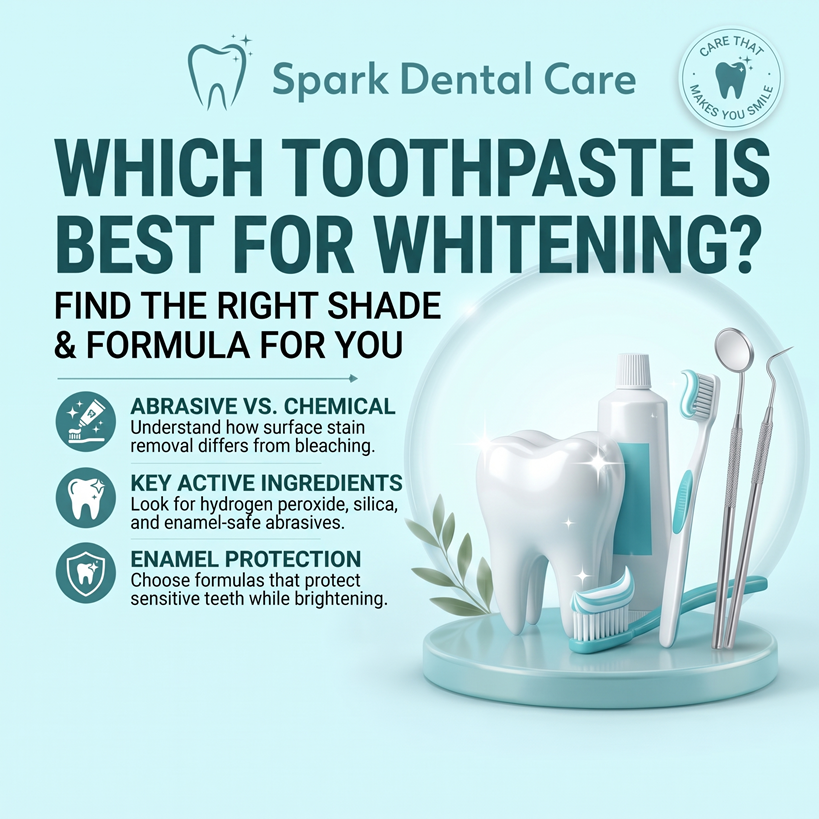
It helps to know that most whitening toothpastes do not bleach your teeth in the way a professional treatment does. They mainly work on the outside. The paste contains mild abrasives that gently polish the enamel and lift surface stains before they settle in, along with ingredients that soften the bond between stains and the tooth. Some newer toothpastes also include a small amount of hydrogen peroxide, which can lighten the tooth slightly, and optical ingredients that create a brighter look for a short time.
How professional teeth whitening works
- Abrasives such as silica gently polish the surface and remove everyday stains from tea, coffee and food
- Stain-dissolving ingredients help break down the film that holds colour on the enamel
- Low-dose peroxide, where present, can lighten the tooth a little over several weeks of regular use
- Optical brighteners and blue or purple pigments can make teeth look whiter immediately, but the effect is temporary and cosmetic
- None of these ingredients can change the natural colour deep inside the tooth
The main types of whitening toothpaste compared
Most whitening toothpastes fall into a few broad groups. Knowing what each one is designed to do makes the shelf much less confusing, and it also helps you avoid paying extra for a feature you do not need.
- Everyday whitening toothpaste - uses mild abrasives and fluoride to keep surface stains in check; a good all-round choice for most people
- Peroxide-based whitening toothpaste - contains a small amount of hydrogen peroxide and can lighten the tooth a little more than an abrasive-only paste; may cause mild sensitivity with frequent use
- Charcoal toothpaste - popular for stain removal, but charcoal can be abrasive and many versions do not contain fluoride, so it is not the best long-term everyday choice
- Sensitive-teeth whitening toothpaste - combines gentle stain removal with ingredients that calm nerve sensitivity; slower to whiten but kinder to delicate teeth
- Baking-soda whitening toothpaste - a mild abrasive that helps with surface stains and is generally affordable; it still needs fluoride to protect against decay
- Blue or purple colour-correcting toothpaste - uses colour science to make yellow tones look less obvious; the effect washes off and does not remove stains
What to look for on the label
The front of the box is designed to sell, so the useful information is usually on the back. A few simple checks will tell you more about a toothpaste than any slogan.
- Fluoride - this is the most important ingredient for preventing decay and strengthening enamel; choose a toothpaste that contains it
- Abrasion level - lower-abrasion pastes are kinder to enamel, especially if you brush firmly or have exposed roots; very abrasive pastes are best used occasionally, not every day
- Peroxide percentage - if you want a little extra lightening, a low-dose peroxide paste can help, but check that it is meant for daily use
- Sensitivity claims - if your teeth react to cold or sweet food, choose a paste that clearly states it is suitable for sensitive teeth
- Third-party validation - a recognised dental association mark or clinical evidence behind the claims is a better sign than a dramatic before-and-after photo
- Flavour and foam - these are personal preferences and have nothing to do with whitening, so do not pay a premium for them
Which type suits your situation?
A quick way to narrow it down is to start with your main concern. Most people fall into one of these groups, and the right toothpaste is usually the one that addresses the concern without causing a new one.
Teeth whitening and smile makeovers
- Coffee, tea or food stains - an everyday whitening toothpaste with fluoride and a moderate abrasion level is a sensible daily choice
- Smoking or tobacco stains - a whitening paste can help with surface stain, but stopping tobacco use and having a professional cleaning makes a much bigger difference
- Sensitive teeth - choose a sensitive-teeth whitening toothpaste and introduce it gradually; if sensitivity continues, get it checked rather than pushing through
- Braces or clear aligners - cleaning around brackets and trays matters more than the paste itself; a fluoride whitening toothpaste plus careful brushing is a good combination
- Crowns, veneers or fillings in the front teeth - whitening toothpaste will not change their colour, so ask your dentist before trying to match them yourself
- Deep or uneven discolouration - this usually needs a dental assessment and professional whitening, not a stronger toothpaste
What whitening toothpaste can and cannot do
Setting realistic expectations is the most useful thing you can do before buying another tube. Whitening toothpaste is a maintenance product, not a treatment. It is excellent at keeping surface stains under control, and it can make a modest difference over time, but it has clear limits.
- It can lift and prevent everyday surface stains from tea, coffee, sauces and tobacco
- It can make teeth look a little brighter over several weeks of consistent use
- It cannot change the natural colour inside the tooth or remove deep, longstanding discolouration
- It cannot whiten crowns, veneers, fillings or implants, which keep their original shade
- It cannot produce the same result as a professional whitening treatment, and using a stronger paste will not make up the difference
- It is not a replacement for a professional cleaning, which removes hardened tartar that no toothpaste can shift
How to use whitening toothpaste safely
Even the best whitening toothpaste can cause problems if it is used too aggressively. Enamel does not grow back, so the goal is gentle, consistent cleaning rather than scrubbing harder. These habits matter more than the brand you choose.
- Use a pea-sized amount of fluoride toothpaste twice a day, morning and before bed
- Brush gently with a soft-bristled brush for about two minutes, covering every surface of every tooth
- Do not press harder or brush longer in the hope of faster results - that wears enamel and can make teeth more sensitive
- Wait about 30 minutes after acidic food or drinks before brushing, when enamel is temporarily softer
- Use a high-abrasion or charcoal paste occasionally rather than as your only everyday toothpaste
- Floss or use interdental brushes daily, because stains and decay often start between the teeth
- Limit frequent tea, coffee, cola and tobacco, and rinse with water after staining drinks
- Keep regular professional cleanings, which remove what toothpaste cannot
When to see a dentist about whitening
Toothpaste is a good everyday tool, but it is not a diagnosis. If your teeth are not responding, if they hurt, or if you want a visibly whiter smile, a dental visit will save you time, money and discomfort. A dentist can tell you whether the colour is coming from the surface, from inside the tooth, or from something that needs treatment first.
Gum treatment and deep cleaning how to manage bleeding gums
- Stains that remain despite weeks of regular whitening toothpaste
- Sensitivity that is getting worse, or pain when eating or drinking
- Bleeding, swollen or receding gums, which should be treated before any whitening
- Cavities, cracks or leaking fillings, because whitening gel on an untreated problem can cause pain
- Existing crowns, veneers or fillings that no longer match the rest of your teeth
- A special occasion or a desire for a faster, more even result than toothpaste can give
Frequently asked questions
Which toothpaste is best for whitening teeth?
There is no single best toothpaste for everyone. For most people with healthy teeth, an everyday whitening toothpaste that contains fluoride and has a moderate abrasion level is a good choice. If your teeth are sensitive, pick a sensitive-teeth whitening toothpaste. If you have deep or uneven discolouration, no toothpaste will fix it on its own, and a dentist can tell you whether professional whitening is the better option. The right paste is the one that matches your teeth and your main concern.
Is charcoal toothpaste safe for whitening teeth?
Charcoal toothpaste can help with surface stains, but it is not the best choice for daily use. Charcoal is abrasive, and brushing with it regularly can wear enamel over time, especially if you brush firmly. Many charcoal toothpastes also do not contain fluoride, which is the ingredient that protects against decay. If you want to try one, use it occasionally and keep a fluoride toothpaste as your everyday option.
Can whitening toothpaste damage my enamel?
Whitening toothpaste is generally safe when it is used normally, but the risk comes from overuse and hard brushing. Highly abrasive pastes used several times a day, or brushing with too much pressure, can gradually wear enamel and make teeth more sensitive. Choose a moderate-abrasion fluoride toothpaste, use a soft brush and gentle pressure, and do not brush immediately after acidic food or drinks. If you notice sensitivity, stop the whitening paste and get advice.
How long does whitening toothpaste take to show results?
Most whitening toothpastes work gradually. You may notice a slightly brighter look within a week or two, but meaningful removal of surface stains usually takes several weeks of consistent twice-daily use. Deep or internal stains will not fade with toothpaste at all. If you have used a whitening toothpaste correctly for a month and see no change, a dentist can explain why and discuss professional whitening.
Is whitening toothpaste safe for sensitive teeth?
Yes, if you choose one that is made for sensitive teeth. These toothpastes usually combine gentle stain removal with ingredients that reduce nerve sensitivity. Introduce it gradually and use a soft brush with light pressure. If sensitivity continues or gets worse, stop using the whitening paste and book a check-up, because sensitivity can also be a sign of decay, a cracked tooth or gum recession.
Can whitening toothpaste whiten crowns, veneers or fillings?
No. Whitening toothpaste only works on natural tooth structure. Crowns, veneers, fillings and implants keep their original shade, so whitening the teeth around them can make the restoration look darker by comparison. If you have visible restorations and want a more even smile, speak to your dentist before whitening, because the restoration may need to be replaced or matched as part of the plan.
How much does professional teeth whitening cost in Chennai?
The cost depends on the type of whitening, the number of visits and the condition of your teeth. In-chair whitening is usually a single-visit treatment, while custom take-home trays are done gradually over a longer period. At Spark Dental Care we check for decay and gum problems first, then give you a written estimate with the recommended plan before treatment begins, so you can compare options without pressure. Call +91 82209 54866 to discuss what would suit your smile.
The best whitening toothpaste is the one that suits your teeth, contains fluoride and is used gently every day - not the one with the boldest claim.
Book a teeth whitening consultation in Sithalapakkam
If whitening toothpaste is not giving you the result you want, a check-up will tell you why. We assess the type of staining, check your gums and existing restorations, and explain whether professional whitening is right for you. Visit Spark Dental Care, Sithalapakkam, on the Medavakkam to Mambakkam Main Road. We serve Medavakkam, Vengaivasal, Kovilancheri, Perumbakkam, Ottiyambakkam, Madambakkam and Mambakkam. Call +91 82209 54866 or book online.